The Quick Explanation
Simply Put:
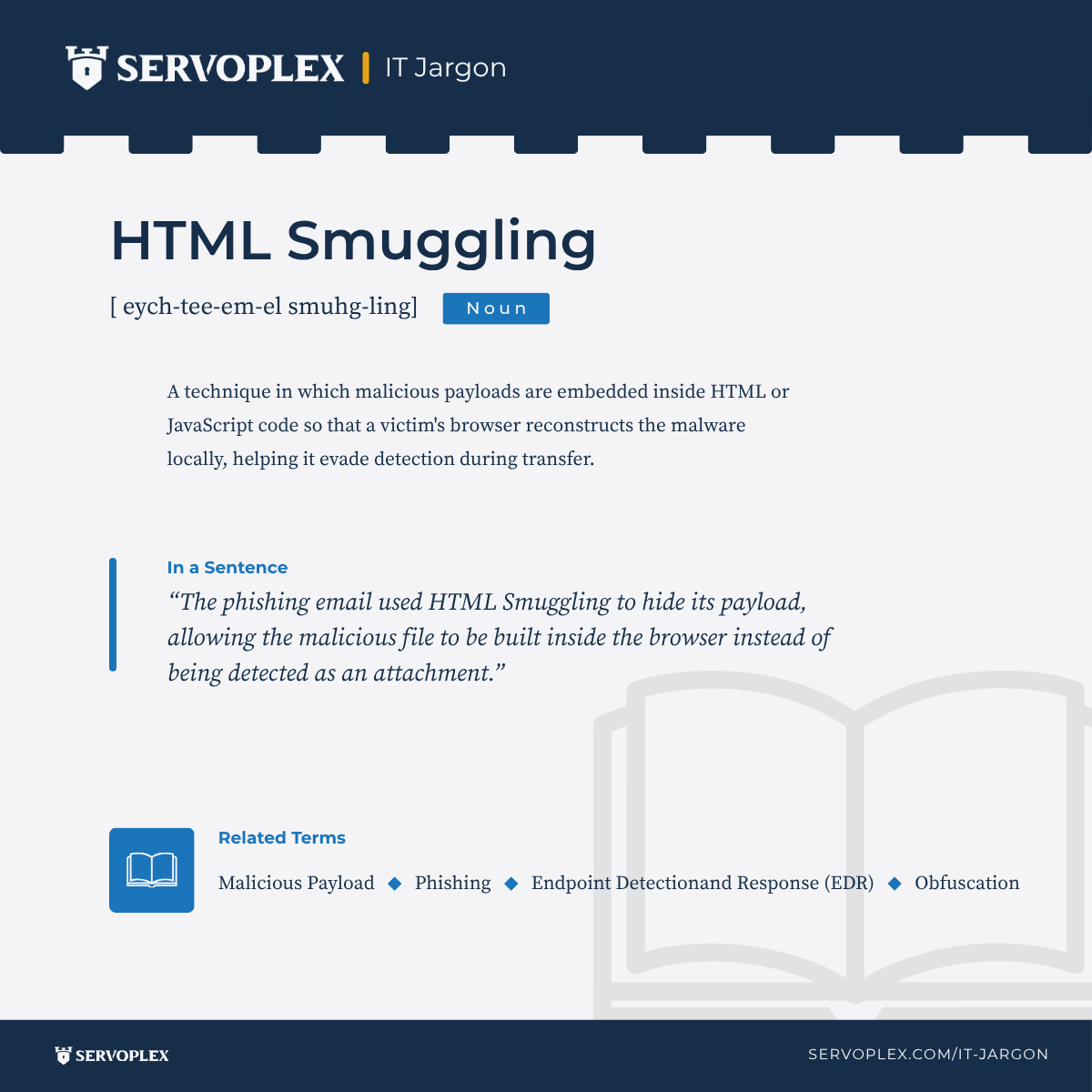
HTML Smuggling is a technique where attackers hide malicious files inside what looks like an ordinary webpage or email attachment. Instead of sending the harmful file directly, they embed the pieces inside HTML or JavaScript code. Once the page loads in a browser, the browser itself puts those pieces back together and builds the malicious file locally, often without ever downloading anything that looked suspicious in transit.
Why it Matters:
This technique is effective because the malicious file never actually travels across the network in a recognizable form, it’s assembled after it arrives, inside the browser. That makes it much harder for traditional security tools to catch, since there’s nothing obviously dangerous to flag until it’s already on the device.
How We Protect Clients:
- Monitor client networks around the clock for unusual browser or file activity
- Keep browsers, endpoint protection, and detection tools current to catch reconstructed threats
- Educate employees to be cautious with unexpected links or attachments, even ones that look routine
- Restrict and monitor what file types are allowed to run on business devices
- Include emerging evasion techniques in regular security reviews
See More…